HOW TO: .

Experience genealogy, family history activities, family photos and pedigree charts while searching for family connections and collections.
Showing posts with label family history. Show all posts

Wednesday, March 13, 2013

Tracing Your Roots is Exciting


Join me!  Tracing your roots looks exciting, and once you start to think about it your really want to get going.  There is so much information you can become "information overloaded". Don't let it get too confusing - Let me help you reach your goals.


You need to have a plan to be able to achieve your goals, and so you can follow these steps to develop your game plan.

  • identify what you wish to research
  • break down each task into manageable pieces
  •  brainstorm potential information sources
  • make a list of the sources you plan to examine
  • make a tentative schedule for completing the task
  • focus on one task at a time 
  • write your plan out in the computer or on paper
  • print and file a copy of your plan in your notebook
  • refer to the plan often
  • revise it as needed
  • be flexible, but stay organized
  • be methodical
  • follow new leads by setting up new plans
  • devise a new plan each time you enter a new phase of research

Wednesday, February 27, 2013

Asking Questions --- Taking Notes...


You will find yourself taking notes as you start researching and discovering new and exciting info about your family and their history.

If you notice that you are actively writing stories, and gathering  information and facts about your family - then that's the time to start paying attention to your notes.  You should develop consistent and systematic note taking methods, and be sure you are using the right materials.

It is only natural to grab whatever is handy to start taking notes when an occasion arises that you can get some family information.

 I did it all wrong - I phoned my mom with every intent of asking her many questions about her mother. I wanted to know what it was like in the day-to-day. I guess I wasn't sure how much information I would  get and how many questions I would ask. I didn't even really have a set of questions to ask. I just planned to let the discussion go wherever it was going to go . 

 I didn't even have a notebook or pen handy.  Once she started to talk I had to grab a used spiral notebook (bad, bad), and a pen that kept skipping,          


Learn from my mistakes - Don't use a spiral notebook, Don't use an old "Big Chief" tablet - they have too much acid and it is good to try to use acid-free or alkaline-based paper. Don't use the back of old envelopes or other scratch paper, stick with good quality 8 1/2" x 11" paper.
Don't use metal clips or rubber bands in with the material you will be keeping for a long time, and don't use transparent tape.

TASK .... Think about note taking and where and how you are going to file your notes:
  • only write about one family member on a sheet of paper
  • note your source first
  • at the top of the page write the name of the family that the notes will pertain to 
  • if notes need to go in more than one file, photocopy them to make a second page or put a cross-reference note in the second folder
  • since you may need to photocopy your notes it is good to use black ink or s soft-lead pencil (blue ink or hard-lead pencil may not photocopy well)

Wednesday, February 13, 2013

Researching your Family History

First Steps to Getting Started

When you have your goal defined for researching your family history you can step up your game plan. Gather your supplies, and now you are ready to begin discovering your past.

Where should you begin your search? - the library, the internet, national archives?

No, you start with yourself and what you already know.  Write down what you know about your family.  Ask yourself key questions, answer the best you can. Be specific! Record everything, be precise and fastidious and do not abbreviate.

Proving Who You Are- look at your birth certificate, it will probably list:
  • your full name at birth
  • your sex and whether you were part of a multiple birth
  • date of birth
  • county and state of birth
  • usual residence of your mother
  • mother's full maiden name
  • her age and race
  • state or foreign country of her birth
  • number of previous children
  • number of her living children
  • father's full name
  • his age and race
  • state or foreign country of his birth
  • his usual occupation
  • kind of business or industry in which he worked
  • name of the informant
  • attending physician or midwife's name
  • signature of the doctor or midwife
  • name of the hospital or institution
  • date of registration
  • registration number on the certificate
  • and usually the certification by the state registrar attesting that it is a true and correct copy of the record
If you don't already have a copy of your birth certificate, you can request one from the state bureau of vital records in the state where you were born.

Wednesday, January 30, 2013

Your Life History

- a gift you can give yourself

These guidelines helped me, perhaps they will help you . . .


Gather and organize your personal records
Make an outline
  • your full name
  • birth info- where , when, etc.
  • parents full names and names of their parents
  • memories of your preschool period- get recollections from parents or older siblings
  • childhood memories about friends, schools, teachers
  • young adulthood- thoughts on growing up, what it was like at home and at school, college
  • courtship and marriage- how you and your spouse met, special dates, the marriage proposal, the wedding, your first home
  • children- incidents that took place during pregnancy, names of children, hopes and dreams you had for your children
  • vocations- jobs held, what you did to prepare for your life's work, different successes you had at work
  • civic and political activities, with a list of positions held, and services that you did performed in your community and church
  • spiritual  and faith-promoting experiences , and the effect those had on you
  • what you plan and hope for the future
If you haven't already started, I encourage you to start writing your history as soon as possible
  • don't be worried about whether your grammar or language is good enough- use your own style and tell how you feel and how things happened
  • be honest, don't embellish, and don't dwell on negative experiences
  • stick with your outline
If you would rather record your history
  • be sure to use a good quality tape and recorder, or digital recorder
  • go to a quiet place so you won't have background noise interruptions
  • speak in a natural voice and speak clearly
  • follow your notes and outline
  • record  you musical talents and other voices if they fit in the story
Keep your history up to date by keeping a journal
  • choose a nice book to keep as your journal
  • set a scheduled time for journal entries, and stick with your plan
  • daily entries are best
Enjoy the opportunity to preserve your life for generations to come.

It is never too early or too late to start - just DO IT!

Wednesday, January 16, 2013

McMurray Family Group Sheet


I have in my possession a family group sheet where my grandmother, Caroline McMurray was a child in the family. This family group sheet is especially special because it has pictures of all the people.

I have been looking at it a lot, looking at pictures, looking at dates, and I got to thinking about her siblings.

Caroline McMurray was the second youngest in a family of 10 children.  Her younger sister, Lila Leora McMurray was Aunt Lila-"with the white hair".  I don't think we called her that to her face but my sisters and I always referred to her that way because on my dad's side we had another Aunt Lila and this was a way to differentiate. Her white hair was really beautiful and she was just a lovely and gracious person. Caroline and Lila were the only children in that family who were born after them moved to Canada. the other eight siblings were born in the United States.

I also remember an Aunt Jennie, but I think as a kid I really didn't know how she was my aunt. Now I sit here looking at this picture from long ago- probably her wedding picture for 25 March 1913- I can see her face in that picture. I wish I had paid more attention.

Today, as I am holding this family group sheet in my hands and it caused me to wonder "Why don't I know or remember any of the others?"  The answer: they all died before I was born or when I was very young.

Here is a list of her family:
Father- James Stevenson McMurray   born: 13 July 1863 - died:22 June 1948
Mother- Sarah Ann Orr    born: 20 Dec 1867 - died: 29 Aug 1901
Brother- Joseph McMurray   born: 9 Feb 1887 - died 28 Sept 1958
Brother - Parley McMurray    born: 25 Sept 1888 - died:22 Nov 1940
Sister - Sadie McMurray    born: 8 Sept 1890 - died: 15 Mar 1891 - she was just a baby
Sister -Lottie McMurray    born: 2 Mar 1892 - died: 7 Oct 1916
Sister - Jennie McMurray    born: 17 Dec 1893 - died
Sister - Eva McMurray    born: 27 July 1896 - died: 19 Feb 1920
Brother - Milford McMurray    born: 15 Dec 1897 - died: 12 Sept 1950
Brother - Richard McMurray    born: 12 Oct 1900 - died: 5 Mar 1952
Self - Caroline McMurray    born: 11 March 1902 - died 3 June 1981
Sister- Lila Leora McMurray   born: 7 Apr 1909 - died        

Wednesday, January 2, 2013

Why Keep a Journal?


Click this link for the article-from the October 1975 New Era
The Angels May Quote From It. 

President Spencer W. Kimball  said:

"Your story should be written now while it is fresh and while the true details are available."
"A journal is the literature of superiority. Each individual can become superior in his own humble life."

"What could you do better for your children and your children's children than to record the story of your life, your triumphs over adversity, your recovery after a fall, your progress when all seemed black, your rejoicing when you had finally achieved?

"Some of what you write may be humdrum dates and places, but there will also be rich passages that will be quoted by your posterity".

Wednesday, November 28, 2012

Oral History Interviews

Oral History Interview Techniques


When you are planning a trip to visit relatives and you want to do some oral history interviews here are a few tips that worked for me. I like to have a bag all packed and hanging inside the front coat closet, then I don't have to look all over for the things I need and run the risk of forgetting something very important.
  • digital or cassette tape recorder (bring a microphone it there is not one built in)
  • AC cord
  • supply of cassettes if using a tape recorder
  • labels for the tapes
  • extension cord
  • extra batteries
  • notepad and pens
  • list of questions, or a book on oral history with sample questions
  • address book to note relatives' names and addresses the person you interview may give you
  • a research notebook with pedigree charts and family group sheets
  • watch or cellphone so you don't overstay your welcome (one hour is a good amount of time for an interview)
  • photocopies of any documents you've gathered to show the relative- they may be good conversation starters
  • photographs that your need to identify
  • magnifying glass, in case the relative needs to have the picture amplified
  • cell phone or other digital camera to take picture of items or documents that cannot leave that home
A lap-top is also really good to have when you go to an oral history interview.

Wednesday, November 14, 2012

Caroline McMurray Davies

I found this short bio on my grandmother- I don't know what it was written for, but it is just a short, concise piece:

Caroline McMurray was the 9th child of James S. McMurray and Sarah Orr. She was born on march 11, 1902 in Orton, Alberta, Canada. Her parents and seven siblings moved from Idaho in march.  It was cold and windy, they had no house, and lived in a tent for a few weeks.  Being very windy in March many times her parents and older brothers would stand outside and hold down the tent poles.

Carrie, as she was called, also had a younger sister named Lila. They were the only ones born in Canada.

When Carrie was nine her mother died of a rare disease. Lila was only four months old. Carrie was very sad and lonesome. Her older sisters helped take care of her and little Lila. Before her mother died, Carrie would stand at her side with a fan to help keep the flies from bothering her.

She attended school to sixth grade. She lived with some of her older siblings to help take care of their children. Late she worked for several different families helping with housework.  While she was doing that kind of work she met George Davies and they were married.

About 18 months after George died in 1957 she attendend Nursing School in Calgary and became a successful Nursing aid and worked at three different hospitals until she retired.

She died June 1, 1981 after being ill with Parkinson's disease.

Thursday, November 1, 2012

Technology for Family History


Went to a Family History Fair in Elk Grove, California.
In the class on technology, Mr. Weber taught that the only technology you need to be successful is a pencil and paper.


But- with the enhanced technology starter kit it makes it a lot easier:
Family Group Sheet
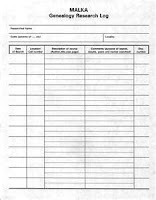
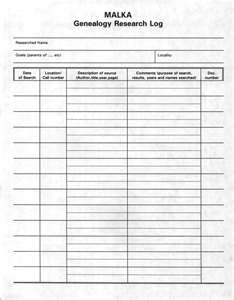
Research Log

Pedigree Chart
  • Pencil
  • Blank Family Group Sheet
  • Blank Research Log
  • Blank Pedigree Chart
     
     
This is really all you need to get started!  AMAZING!

Saturday, October 27, 2012

William George Davies

George Davies --- by Caroline Davies

This was page 405 of an unidentified book.  I only have a copy of this page.  But since my grandma wrote it, I have to include it, even without the source.
Russian thistle
The George Davies family came to Carmangay district in April, 1928.  We had two daughters, Shirley Maxine, two years old, and Glenna Elaine, three months. We bought the Stanley Robinson farm of three quarters, seven and one-half miles west and south of Carmangay. It was a real struggle the first few years -- so much wind and the soil was so light, so had lots of soil drifting and I guess that's why they called it the dirty 30's.
1930's tractor
We farmed with horses for a number of years, later we were able to buy another quarter section joining our south quarter from Jack Gillespie. We were able to sell our horses (although many tears were shed) for a second-hand tractor and later a Johnson blade and that was the answer to soil drifting.


Grasshoppers were terrible for a number of years and took so much of our time spreading bait. Russian thistles were also a menace and we used to burn them in the spring.
grasshopper

We had to haul out drinking water in a stone-boat in barrels, baling it by hand for our own use and the livestock, later getting a pump.

gopher
Gophers were plentiful too -- the municipality offered one cent a tail so we bought traps and I trapped for days.  Earl Blaine was teaching school at Prairieville and boarded at our place -- he used to shoot the gophers and let me have their tails.  I made $7.50  -- so that was quiet something!

We took in the Christmas concerts at all schools for miles around and also went over to the Starline every two weeks to dance to Mackie Russell's orchestra.  We didn't have a babysitter those days so we took the girls tucked in the bottom of the buggy.

Glenna went to Burwash School when she was five years old to help keep the school open as they needed six pupils.  Miss Hazel McAllister was the teacher.  Pupils at that time were Pearl Russel, Eileen and Phyllis  Simmons, Helen Anderson, Shirley and Glenna. After the school closed the girls went to Ryckman.  Josie Hubka was teacher. They went to Rykeman for a number of years and then were vanned to Carmangay.

During the country school days dances were held in one school or the other every week, and those were the best times ever.  Everyone was welcome. Ladies brought lunch and everyone enjoyed themselves.  We had the best stampedes at Carmangay for years and people came from many miles away. Agricultural Fairs were an annual event, also Bobbie Burns concerts.

coal bucket
On January 31, 1939 our only son, Murray George came to our house and our family was complete.  We hauled coal from east of Carmangay and Champion as we had only coal stoves and furnaces.  What a treat when we could finally afford a wind-charger, 32 volt electric plant.  We got plenty of wind and could really enjoy some of the comforts of living.  Had my first power washer when I was 46 years old. Later we got Calgary Power. First telephone June 4, 1945.

Friday, October 26, 2012

Grab a cardboard box ---


To help organize your personal and family records so you can use them when you write you life history.  Actually, it doesn't really matter what type of box, but put it in a very obvious place.  When I was doing this, I used a couple of different boxes.  I had one in the hall upstairs, and one on the dining room table.(I didn't want to make going up and down stairs an issue on whether it would get put in the box, or whether I would set it on a shelf or counter.

The next thing to do is casually go about your daily work around the house, but now with your eyes, mind and heart focused on finding important papers. Over the next few weeks you can collect and put into the box records of your life.
  • birth certificate
  • certificates of ordination
  • certificates of graduation
Everything that you can find pertaining to your life - diplomas, honors, awards, photographs, a journal or diary goes into the box.  Anything that is written or registered or recorded that testifies what you have done during your life.

The process takes a while, that is OK,  don't rush it.  You will probably find that these things are scattered all over the house. I truly found them all over the place.  I found some in several boxes in our shed. A few more were discovered in a box under a bed, and several important pieces were located in various other boxes in closets and in the garage. ( I was looking for important paper documents for all my kids...so I really had to search all over.)

Gather all the items and keep them together in the box, and keep collecting.  When you get to the point that you think you have everything available you can go on to the next step.

Next steps:
Sort everything out on a table and divide your life into three periods -
  1. Start with the birth certificate and sort every record that goes with childhood- photographs, records and other documents until age 12. Arrange them in chronological order.
  2. Then pull together everything that pertains to your youth - from 12 to 18 years of age- put it all together chronologically.
  3. Then all other records fit the section for the rest of your life.
Line up all these records - the certificates and the photographs and all other items and keep them safe in an other envelope or box..

By gathering these items you have began to compile the important information you will need when you want to start your family tree or do a pedigree chart.  

Tuesday, October 23, 2012

Your Life Story

Why Should You Tell Your Life Story -


Paper and Pen
By writing your story you find what has real meaning in your life.


Laptop
Struggles and hardships, as well as our achievements and blessings teach us our life lessons.  Together with your experience, your strengths and your weakness and all your hopes and dreams help to make a unique story that is "YOU"!
Manual typewriter

To share with others who you are and what you are all about, and especially what you believe in is passing on some very valuable personal history.

Friday, October 19, 2012

Launa Fowler Stout - My Own Story


One spiral notebook

Thinking about my ancestors has made me think about writing my own story. I should be journaling my  experiences but also need to go back and write my past.

In 1979 we moved to Ft. Riley, Kansas. I was taking a class where the teacher challenged us to write everyday in a journal.  I didn't feel that my life was special enough to go out a buy a nice journal. I was also worried that my handwriting was not going to be neat enough, so I just bought an orange spiral notebook. I filled up several orange spiral notebooks over the next year or so.

What did I learn from that experience?
My life as I was in the day-to-day of it didn't seem too spectacular, but when looking back on the experiences from the writings in my journal, it was pretty amazing.  I found that by reading those pages floods of memories came to my mind, and now, because it is in print and I can read it,  I remember the year we spend in Kansas as one of the best years.

I wish I had bought a nice journal when I started, because my life was worth it, and it didn't matter that my handwriting was not perfect.

Tuesday, October 16, 2012

Thomas Fowler - Handcart Pioneer


My paternal great-great grandfather...

Emigration - Thomas Fowler was on the very first Perpetual Emigration Handcart Company (the Edmund Ellsworth .Co. of 1856).
He responded to the following call from the First Presidency of the LDS Church to "Come to Zion" from Worcestershire, England.  He submitted his one pound note as a deposit to the Church Elders (which her received back once arriving in the Utah Territory), and signed on the sailing ship "Enoch Train".

Friday, October 5, 2012

Use a Research Log


From the moment you start searching for information it is important to have a method to track the sources and information you find.

If you don't you will probably find that you look in the same sources more than once. It happened to me repeatedly when I first got started. I was searching so many different places, but many of them sent me to the same primary source.

A research log is a form  that will be specific for one person, and you will write every source you look at for a particular person. Write the library call number or microfilm reel number. Write the name of a book, the location, etc.

You think you will remember what we looked at, but as we get deeper and deeper into a project, it becomes hard to remember all the sources.

Always carry your research logs with you, even if you think you are only going to just research on one person.  It seems like inevitably, you find information about other relatives - and you need a place to record that information.

Another option that someone suggested was to write a person's info on the front of an index card, and tuck it in your pocket to take with you.  Record all sources searched on the back of the card.


This sounded like a great idea, so I tried to get creative and use all pink cards for ancestors on my mom's side, and all blue for those on my dad's side.

I found them too small to record everything I needed, and they were too easy to lose so it was back to the Research Log.  Be sure to make many copies of the log so that you have one for each person you will be searching for information.

Monday, September 10, 2012

Middle Names and Given Names


When I look at my family group sheets I keep seeing the same names, repeated.
For example: My grandmother, Louise King Fowler's father is Thomas Owen King - 1869-1946, and his father was Thomas Owen King is 1840-1921, and his father was Thomas Owen King 1800-1874.

Tuesday, September 4, 2012

Labeling my File Folders


I am still  trying to figure out just how I want to start labeling my folders.

My personality wants them all typed on labels with an interesting font...but then I am too committed. . .

So, I will actually start with a pencil and set up a file folder for my great-grandfather James Stevenson McMurray(the father of Caroline McMurray, my grandmother).  

I also have information on his parents so I will set up a file for them also. 


Everyone I have talked to has a different slant to the way they want their files named . . . so that tells me there is no right or wrong way. By starting in pencil I can easily change my system if I decide to.


I am using plain manila files, but imaging how pretty it would look to have different colors, and use a certain color for the different lines on your pedigree chart. I love color coding, so maybe after a while I will change to colored folders - I will let you know.

Filing by Couple or Family Group
  • every couple on your pedigree chart gets a file folder
  • label the folder with the names of the couple (wife's maiden name)
  • list names of the couple's children on the outside for the file folder for quick reference
  • if a child is married, make a file folder for that marriage
Filing by Surname and Type of Record
  • create file folders for surname/record type combination's
  • label folders with surname, followed by the type of record, e.g., Davies: Obituaries or Davies: Census Records
  • arrange file folders alphabetically by surname then alphabetically by type of record