HOW TO: .

Experience genealogy, family history activities, family photos and pedigree charts while searching for family connections and collections.

Wednesday, October 31, 2012

Hangout at a Cemetery?


You can find so much information on a visit to a cemetery. Some folks like to plan their vacations around checking out cemeteries for birth and death dates.

You may want to pack a lunch and have a picnic surrounded by your ancestors. Let your kids see how special this can be, not morbid at all.

Once again I suggest having a tote bag already packed for the occasion.  Make sure this tote bag is a bright color- just not green or brown.  Why? You will probably get so distracted as you go from grave marker to grave marker that you will leave your tote bag somewhere and if it is brightly colored it will  be easier to find.

Another suggestion is to have it waterproof so the contents will be protected if the ground it wet or snowy.
  • notepad, pens and pencils
  • research notebook with pedigree charts and family group sheets
  • apron with pockets for carrying items as you go from tombstone to tombstone
  • knee pads like you use in the garden- I always have to kneel down closer to see something on the tombstone
  • garden shears to cut away overgrown grass
  • little whisk broom to remove dirt and grass
  • sunscreen- you will always end up staying out there longer than you planned
  • bug repellent
  • wet wipes- to wash your dirty hands before you eat
  • digital camera
  • spray bottle with water- you might need to wet the stone a bit to make the image show better for photographing
Gravestones are historical artifact. Don't do anything to harm them, and don't try to clean them.

Don't forget to take your camera!

Saturday, October 27, 2012

William George Davies

George Davies --- by Caroline Davies

This was page 405 of an unidentified book.  I only have a copy of this page.  But since my grandma wrote it, I have to include it, even without the source.
Russian thistle
The George Davies family came to Carmangay district in April, 1928.  We had two daughters, Shirley Maxine, two years old, and Glenna Elaine, three months. We bought the Stanley Robinson farm of three quarters, seven and one-half miles west and south of Carmangay. It was a real struggle the first few years -- so much wind and the soil was so light, so had lots of soil drifting and I guess that's why they called it the dirty 30's.
1930's tractor
We farmed with horses for a number of years, later we were able to buy another quarter section joining our south quarter from Jack Gillespie. We were able to sell our horses (although many tears were shed) for a second-hand tractor and later a Johnson blade and that was the answer to soil drifting.


Grasshoppers were terrible for a number of years and took so much of our time spreading bait. Russian thistles were also a menace and we used to burn them in the spring.
grasshopper

We had to haul out drinking water in a stone-boat in barrels, baling it by hand for our own use and the livestock, later getting a pump.

gopher
Gophers were plentiful too -- the municipality offered one cent a tail so we bought traps and I trapped for days.  Earl Blaine was teaching school at Prairieville and boarded at our place -- he used to shoot the gophers and let me have their tails.  I made $7.50  -- so that was quiet something!

We took in the Christmas concerts at all schools for miles around and also went over to the Starline every two weeks to dance to Mackie Russell's orchestra.  We didn't have a babysitter those days so we took the girls tucked in the bottom of the buggy.

Glenna went to Burwash School when she was five years old to help keep the school open as they needed six pupils.  Miss Hazel McAllister was the teacher.  Pupils at that time were Pearl Russel, Eileen and Phyllis  Simmons, Helen Anderson, Shirley and Glenna. After the school closed the girls went to Ryckman.  Josie Hubka was teacher. They went to Rykeman for a number of years and then were vanned to Carmangay.

During the country school days dances were held in one school or the other every week, and those were the best times ever.  Everyone was welcome. Ladies brought lunch and everyone enjoyed themselves.  We had the best stampedes at Carmangay for years and people came from many miles away. Agricultural Fairs were an annual event, also Bobbie Burns concerts.

coal bucket
On January 31, 1939 our only son, Murray George came to our house and our family was complete.  We hauled coal from east of Carmangay and Champion as we had only coal stoves and furnaces.  What a treat when we could finally afford a wind-charger, 32 volt electric plant.  We got plenty of wind and could really enjoy some of the comforts of living.  Had my first power washer when I was 46 years old. Later we got Calgary Power. First telephone June 4, 1945.

Friday, October 26, 2012

Grab a cardboard box ---


To help organize your personal and family records so you can use them when you write you life history.  Actually, it doesn't really matter what type of box, but put it in a very obvious place.  When I was doing this, I used a couple of different boxes.  I had one in the hall upstairs, and one on the dining room table.(I didn't want to make going up and down stairs an issue on whether it would get put in the box, or whether I would set it on a shelf or counter.

The next thing to do is casually go about your daily work around the house, but now with your eyes, mind and heart focused on finding important papers. Over the next few weeks you can collect and put into the box records of your life.
  • birth certificate
  • certificates of ordination
  • certificates of graduation
Everything that you can find pertaining to your life - diplomas, honors, awards, photographs, a journal or diary goes into the box.  Anything that is written or registered or recorded that testifies what you have done during your life.

The process takes a while, that is OK,  don't rush it.  You will probably find that these things are scattered all over the house. I truly found them all over the place.  I found some in several boxes in our shed. A few more were discovered in a box under a bed, and several important pieces were located in various other boxes in closets and in the garage. ( I was looking for important paper documents for all my kids...so I really had to search all over.)

Gather all the items and keep them together in the box, and keep collecting.  When you get to the point that you think you have everything available you can go on to the next step.

Next steps:
Sort everything out on a table and divide your life into three periods -
  1. Start with the birth certificate and sort every record that goes with childhood- photographs, records and other documents until age 12. Arrange them in chronological order.
  2. Then pull together everything that pertains to your youth - from 12 to 18 years of age- put it all together chronologically.
  3. Then all other records fit the section for the rest of your life.
Line up all these records - the certificates and the photographs and all other items and keep them safe in an other envelope or box..

By gathering these items you have began to compile the important information you will need when you want to start your family tree or do a pedigree chart.  

Thursday, October 25, 2012

Diphtheria in the 1930's


"In the early 20th century diphtheria outbreaks evoked fear around the world. Until the 1930s it was one of the most common killers of children in Canada and the United States."

I found this quote on the site from the Canadian Medical Association and talked to my mom to see if she knew anyone who had diphtheria. It jogged her memory and she told me that she remembered hearing that her father, William George Davies had had diphtheria when he was a child and even missed a year of school to recover. Her dad was very close lipped about many things so she had not heard this from him, but it was shared from her Aunt Sis (her dad's sister). She wished now that she had asked more questions.

Canadian Medical Association

Wednesday, October 24, 2012

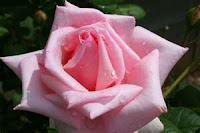
Roses for Glenna


According to a book about flowers- 
ROSES: The person who loves roses is sentimental and good-hearted. They will hold onto cherished memories and share stories of the past with children who always seem to look up to them.  Because of this, elders respect that person and the characteristics of what you have become, and what you stand for.  That person will  have an active imagination and will love the natural beauty of the things around them .

My mother, Glenna, loved roses, and she is my inspiration for holding onto the cherished memories, and for wanting to share the stories of the past.

When I was born, my dad, Allan King Fowler brought a water globe with some fresh roses in it to the hospital for my  mom - I guess that was instrumental in the subconscious passing of  the love of cherished memories and family stories to me.


Tuesday, October 23, 2012

Your Life Story

Why Should You Tell Your Life Story -


Paper and Pen
By writing your story you find what has real meaning in your life.


Laptop
Struggles and hardships, as well as our achievements and blessings teach us our life lessons.  Together with your experience, your strengths and your weakness and all your hopes and dreams help to make a unique story that is "YOU"!
Manual typewriter

To share with others who you are and what you are all about, and especially what you believe in is passing on some very valuable personal history.

Sunday, October 21, 2012

Family History Terms

    Let's get started with some Family History terms- it will make it easier if you become conversant with these definitions:
  • Abstract - summary of important points of a text of document
  • Administrator - person appointed to manage or divide the estate of a deceased person, especially one who died without a will, feminine: administratrix
  • Alien - noun: a foreigner, citizen of another country; verb: to transfer property to another
  • Ancestor - person for whom you are descended; a forefather; a forbear
  • Ancestry - all forebears of a person, from parents backwards in time
  • Archives- records of a government, organizations, institution, the place where such records are stored     
  • Attest - to affirm: to certify by signature or oath   
  • Banns - public announcement of an intended marriage
  • Bequeath - to give personal property to a person in a will, noun: bequest
  • Bond - a binding agreement to perform certain actions or duties or be required to pay a specified sum of money as a penalty; at different times rewired of estate administrators or executors, grooms, certain elected officials. A bondsman, often a relative, acted as surety.
  • Bounty land - land promised as reward or inducement for enlisting in military service